Photo to invoice
- 01
Capture
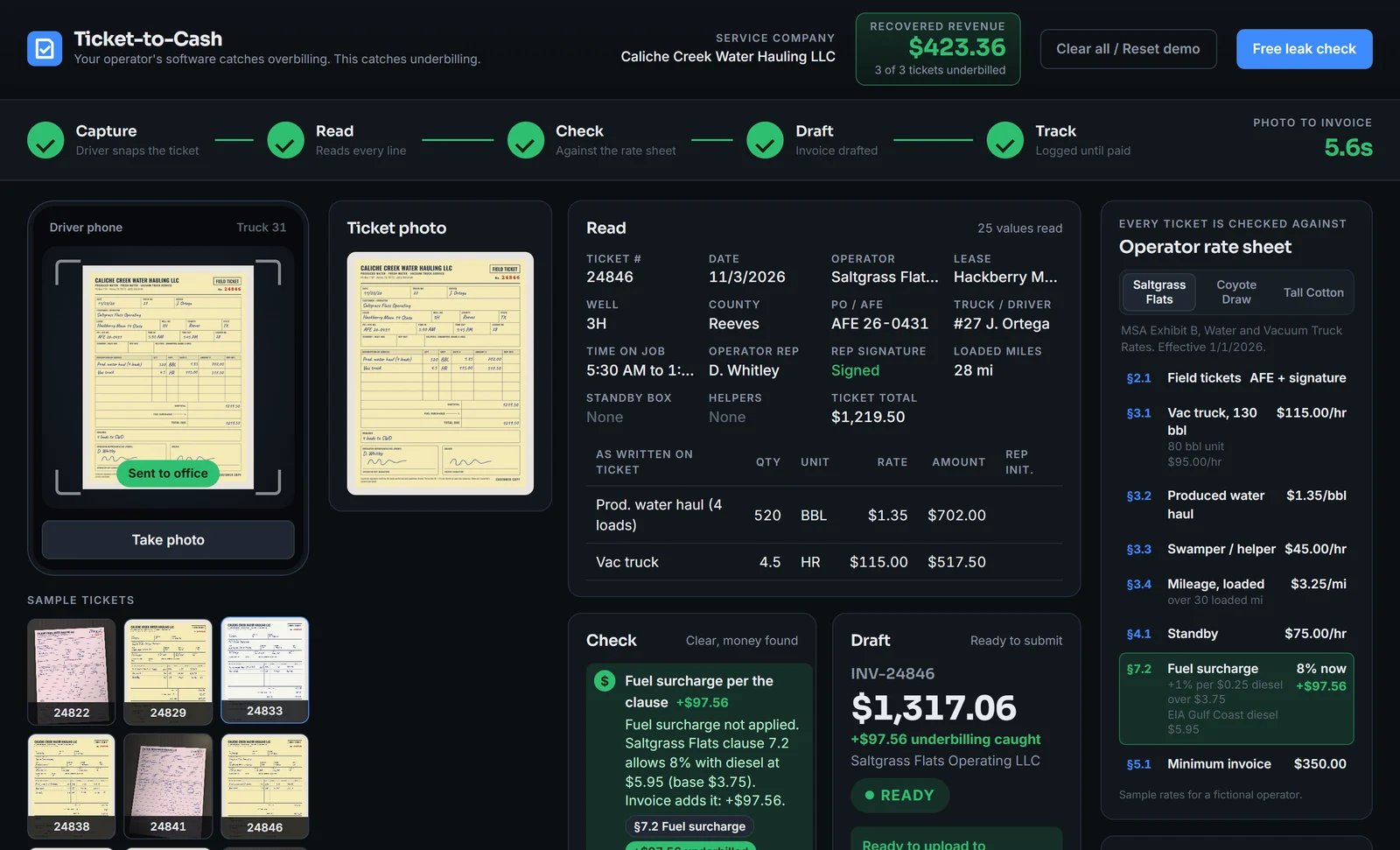
The driver snaps the ticket on the phone. Paper is fine.
- 02
Read
Every line comes off the ticket: lease, AFE, hours, barrels, miles, standby, signatures.
- 03
Check
Against that operator's rate sheet, clause by clause. Money missed goes back on. Paperwork gaps stop it going out.
- 04
Draft
The invoice, corrected, with the ticket and backup in one packet.
- 05
Track
Logged until it's paid, with what each ticket would have missed.

What we build
Three parts, built around your rate sheets, your operators and your crews. The leak audit decides which one goes first.
Fuel surcharge recovery
- Every fuel clause on file, by operator
- The weekly EIA diesel price pulled in
- The surcharge applied to every invoice it belongs on
- An evidence pack when a clause is worth renegotiating
Standby and extra work
- Wait time logged on location, with the time stamped
- Sent to the company man for sign-off while he's still there
- The standby line added to the invoice, backup attached
Ticket check and invoice
- Rates, tiers, minimums and mileage checked against the sheet
- Invoice drafted with the corrections
- A packet ready for the operator's portal
- Rejections and short pays tracked and chased
- An alert when a finished job has no invoice after 48 hours
Questions owners ask
Do my drivers need to learn a new app?
Not to start. A phone photo of the paper ticket they already fill out is enough for the check to run.
What happens when a ticket is wrong?
It doesn't go out. The check shows the line, the clause and the dollars, and your office decides. Missing paperwork, like an AFE number or a signature, holds the invoice until it's fixed.
Does this replace our billing system?
No. Invoices still land in QuickBooks or the operator's portal the way they do now. This sits in front of them and checks the money first.
Why start with the leak audit?
The audit tells us which leaks are real in your shop and what each one is worth. The build fixes the biggest ones first, and the audit fee is credited to it.
Who keeps it running?
We do. New rate sheets and MSAs go in when they change, the diesel price updates every week, and you get a monthly page: fuel recovered, standby billed, tickets caught, days to get paid.